Police removes Rahul, Priyanka, other Congress leaders from dharna site near PM Modi's residence
.gif)

Download Mobile App 






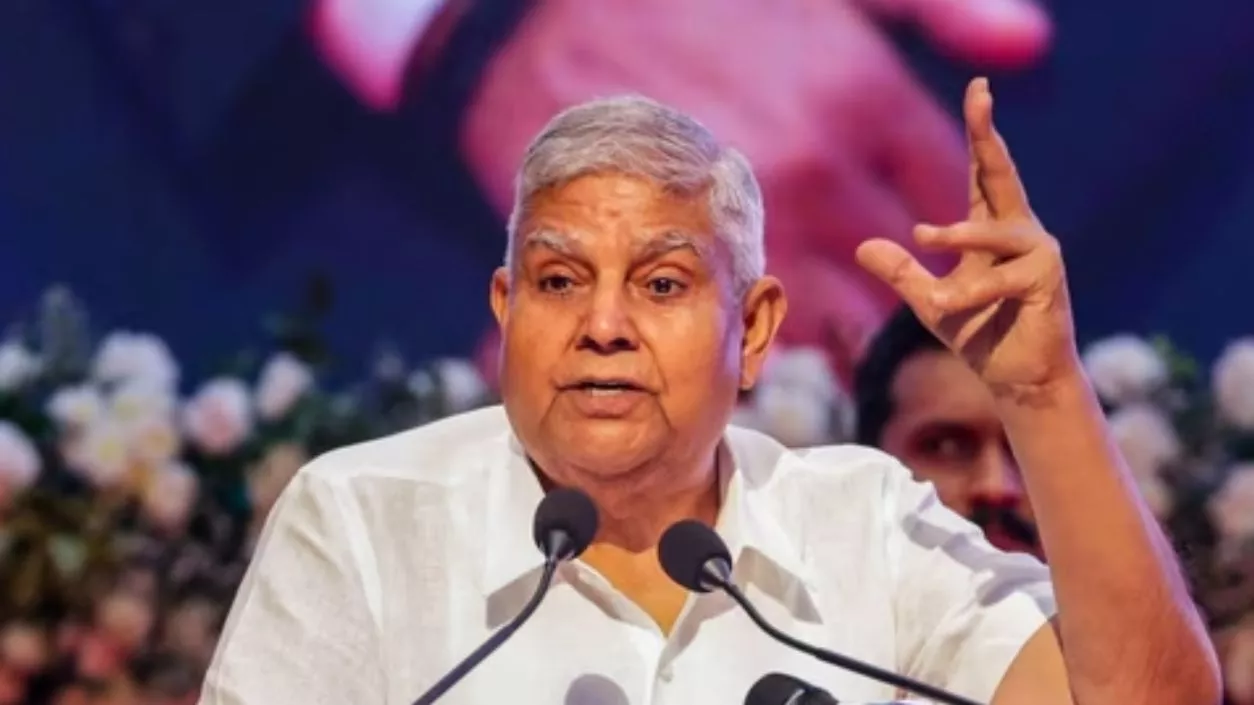
Vice President Jagdeep Dhankhar, while addressing the 4th convocation ceremony of the Indian Institute of Information Technology (IIIT) in Kota, Rajasthan, on Saturday, criticised the country’s coaching industry, particularly in Kota, stating that these centres have turned into “poaching centres.” He said they function like “black holes for talent in regimented silos” and are harming student development.
Kota is a leading destination for students preparing for competitive examinations like the Joint Entrance Examination (JEE) and National Eligibility cum Entrance Test (NEET). Dhankhar expressed concern over the mushrooming of coaching centres and said, “This is menacing for our youth, who are our future. We must address this malice that is worrisomely concerning. We cannot allow our education to be so smeared and tarnished.”
He criticised coaching institutes for their heavy spending on advertisements, questioning the source and purpose of such expenditure. “Money is poured into billboards and advertisements in newspapers. This money comes from those who either take loans or who painstakingly save to make their future brighter. This is not optimal utilization of money. These advertisements are alluring, but they are eyesores to our civilisational ethos,” Dhankhar said.
On academic pressure and its psychological impact, the Vice President said, “The obsession with perfect grades and standardized scores has compromised curiosity, which is an inalienable facet of human intelligence. Seats are limited, but coaching centres are all over the country. They prepare the minds of students for years and robotize them. Their thinking becomes completely stymied. A lot of psychological problems can arise out of it.”
Speaking on technology and national security, Dhankhar cautioned against dependence on foreign digital systems. “Nations will no longer be compromised or colonised by armies, as armies have now been replaced by algorithms. Sovereignty will not be lost through invasions, but through dependence on foreign digital infrastructure,” he said. He further added, “If we get technology-driven equipment from outside, especially in sectors such as defence, that country has the power to bring us to a standstill.”





.webp)


 West Bengal
 Bihar
Bihar Uttar Pradesh
 Jharkhand